

What is Greenwashing?
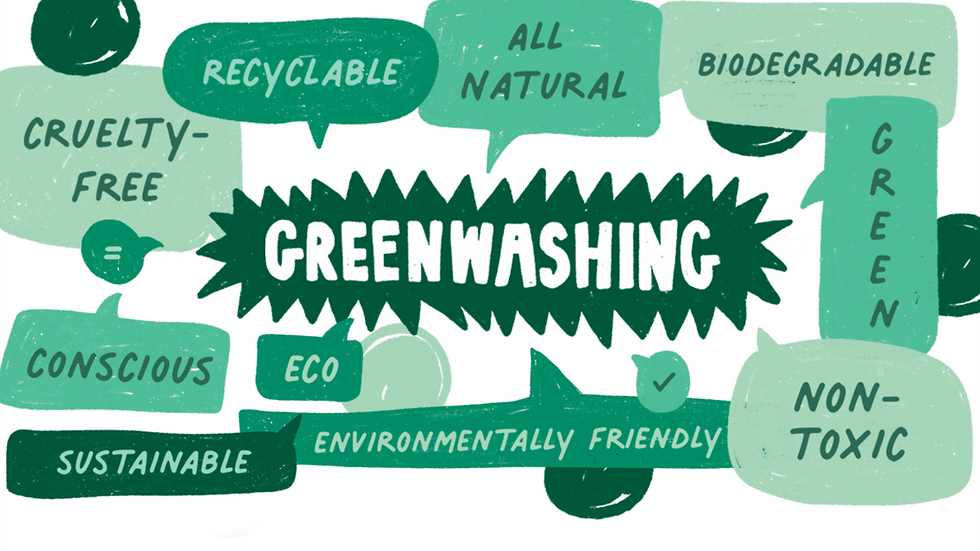
Many corporations engage in ‘greenwashing’ tactics.
Greenwashing involves marketing products to appear more environmentally friendly than they really are.
Profit-driven corporations are aware that many consumers care about the environment and want eco-friendly products. To appeal to these consumers, they use terms such as ‘carbon-neutral’, ‘organic’, ‘farm-fresh’, ‘biodegradable’ and ‘sustainable’. They may also use circular or green imagery on their packaging and promotional material.
These labels sound good but are often vague, misleading or meaningless. They are used to drive profits and are not backed up by any real commitment to looking after the planet.
Greenwashing is not just about trying to sound environmentally friendly. It is a deliberate PR tactic by corporations to obscure the negative environmental impact of their products. Making real ‘green’ improvements to products is expensive. It’s much more profitable to use clever marketing that appeals to the consumer’s conscience, whilst deliberately hiding the cost to the environment.

Plastic corporations continue to make profits by using greenwashing tactics to distract consumers from the devastating consequences of plastic. Plastic products are incredibly harmful to the environment, damaging ecosystems, affecting human health, and leading to greenhouse gas emissions.
Examples of greenwashing tactics by the plastics industry include:
Token green gestures e.g. promoting that a product is recyclable whilst continuing excessive plastic production.
Making misleading statements that sound good like ‘made from 100% recycled content’ or ‘100% recyclable’.
Using vague imagery such as green/circular labelling without the environmental credentials to back it up.
Using meaningless terms like referring to products as ‘plastic neutral’.
Promoting plastic design changes e.g. changes that supposedly aid in recyclability.
Promoting false solutions e.g. using bio-based or biodegradable plastics, which sound eco-friendly but are problematic and often used to justify further plastic use.
Ultimately, greenwashing distracts the public from the real issues - such as excessive plastic production - delaying us from being able to make any meaningful change.
+++++++++++++++++
For more information contact: info@scarabtrust.org.uk
Images:
Greenwashing synonyms - Image from spunout.ie (ST ref: 1297)
Greenwashing one to ten - Image from sigmaearth.com (ST ref: 1295)


Comments