

Indonesian health impacted by UK plastic waste

Indonesia is one of the most recent Southeast Asian countries to ban plastic waste imports. Despite the ban, the consequences of plastic waste imports inundating Indonesian communities remain, and they serve as a warning for neighbouring countries yet to impose their own bans.
The Indonesian government initially attempted to create livelihoods with the waste imports. Paper mills were to use these imports to source scrap paper to reuse in their production, and local communities were to be recruited to sort these scraps from plastics. The sheer scale of the imports turned this idea into a health nightmare for local communities.
Where locals once dried agricultural products outside their homes, unsorted plastic and paper waste was unloaded in truck-fulls. It would take families over a month to process just one batch, and they sold the sorted scrap paper to a paper factory for the equivalent of just £4.30.
Subscribe to our fortnightly newsletter
Get our top stories straight to your inbox every two weeks and stay informed about plastic pollution!
The locals were left to deal with the leftover plastic by themselves, a lot of which was recognisably the packaging of products sold in Britain. When Indonesia’s recycling waste management infrastructure was struggling to keep up, what could locals do to clear the leftover plastic from imports? Most burnt it.
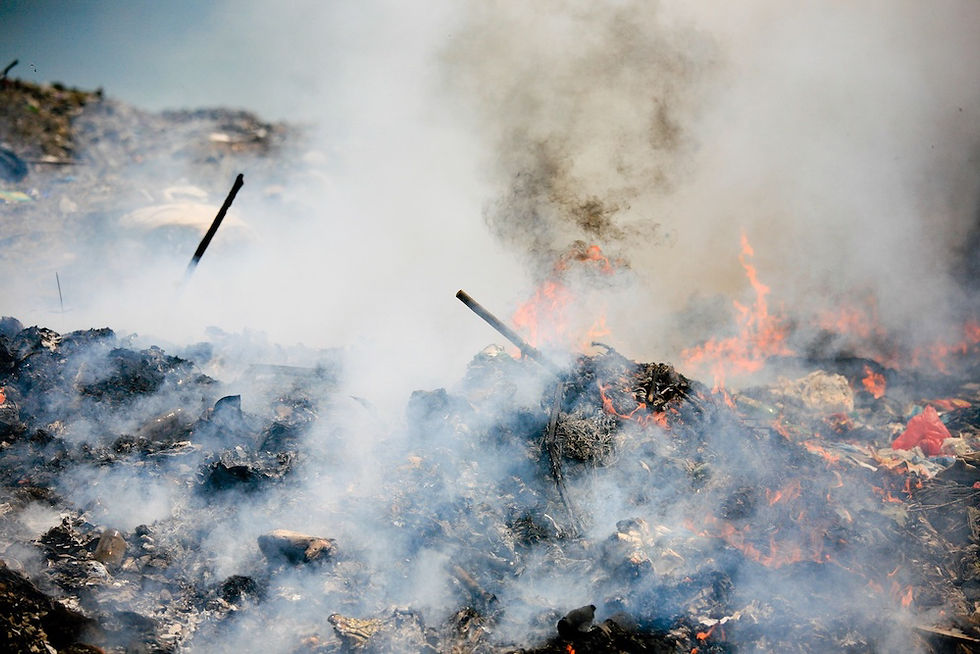
Burning plastic releases microplastics and toxins into the surrounding environment and infiltrates other food sources, such as chicken eggs. If you were to eat just one egg produced near the site of a plastic-fuelled fire, your daily intake of plastic toxins would surpass 70 times that designated as tolerable by the European Food Safety Authority. Exposure to these toxins has been linked to cancer, diabetes, cardiovascular disease, and endometriosis.
Many locals were unaware of the health risks, and some activists believed that even if they were, they would have continued due to the lack of alternative livelihoods.
Every actor in the chain passed on the risk to these families:
The UK palmed off its plastic waste to exporting companies;
Exporting companies profited from the Indonesian government purchasing the waste;
The Indonesian government stimulated growth and tax income in the paper industry; and
The paper mills increased their profit margins by outsourcing cheap, informal labour to sort their waste.
And who suffered the most risk? Local families just trying to provide for their loved ones. It is time for the UK government to take full responsibility for processing our plastic waste on our own shores, rather than continuing to poison developing countries’ citizens.
+++++++++++++++++
For more information contact: info@scarabtrust.org.uk
This is Part Three of the series:
Part One: Is rinsing out your yogurt pot pointless?
Images
Indonesian kids with bits of trash - Image from BFFP: Story of Plastic (ST ref: 1067)
burning waste landfill peru - Image by Alex Proimos on creativecommons. (ST ref: 1099)


Comments