

The invisible impact of soft plastic pollution on health
Updated: Jul 4
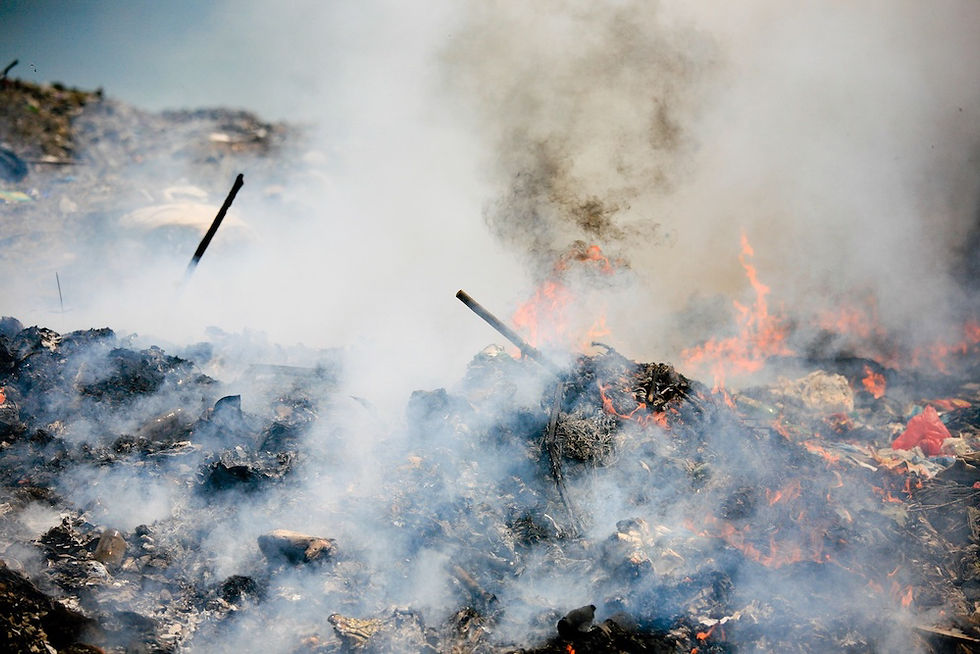
Single-use soft plastics, such as sachets and crisp packets, are produced on a massive scale but are nearly impossible to recycle. Nevertheless, they are exported across the world for waste management.
The sorting process for soft plastic waste is difficult and requires that workers identify and separate over seven different types of plastics, often by burning them and smelling the fumes produced. To be recycled, the sorted plastic must then be cut into fine pieces, washed, and melted down into plastic pellets that can be repurposed. This process raises major health and environmental concerns, as workers are exploited for their labour, toxic fumes are emitted, and polluted water from the washing process is released into the environment. This water runs into sewers, waterways, and local soil, potentially contaminating drinking water sources and the irrigation systems used for agriculture. Sachets that cannot be sorted or melted down end up being incinerated, burned in outside fires, buried in nature, and dumped in bodies of water and landfills.
Soft plastics have been made to appear ‘invisible’ to consumers, particularly in the West, as soft plastic waste is shipped ‘far away’ thanks to disposal schemes labelled as sustainable.
It is a human right to live and grow up in a healthy and sustainable environment. Unfortunately, this right is not the reality of people living in the countries where plastic waste is shipped to be processed by poorly funded and managed waste disposal systems. In towns near plastic incinerators and extraction plants, children are no longer able to play outside due to toxic fog in the air and grow up with unusually high rates of life-threatening diseases, such as leukemia
What’s next?
Communities are paying the price for plastic pollution, rather than the companies creating single-use soft plastics. Therefore, governments and consumers must play a vital role in changing these systems and behaviour.
Read more about sachets in episode 3 of this three part series: Who Pays for Soft Plastic Pollution?
+++++++++++++++++
For more information contact: info@scarabtrust.org.uk
Image: burning waste landfill peru - Image by Alex Proimos on creativecommons. (ST ref: 1099)
Edited by Sophia Stilwell


Comments