

Old Habits Die Hard: What Scotland’s ‘Black Bag’ Waste Ban Could Mean for Recycling
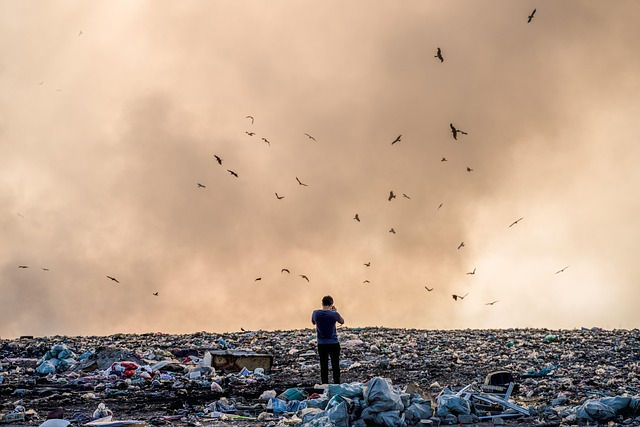
You might have heard about Scotland’s ‘black bag’ waste ban. The ban is set to cover all biodegradable municipal waste (BMW), in both the domestic and commercial sectors. BMW encompasses the significant portion of municipal waste that breaks down naturally, e.g. food waste, garden waste, paper, cardboard, and natural fibres.
But you may question: isn’t waste breaking down naturally a good thing? After all, isn't biodegradable waste preferable to plastics and metals that persist and pollute?
The answer is yes, but not in landfills.
When BMW is bagged and compacted under tonnes of waste, bacteria lack the oxygen needed for aerobic decomposition. Instead, anaerobic breakdown occurs, generating landfill gas: methane and carbon dioxide. Methane traps 84-87 times more heat than carbon dioxide over 20 years, making it a potent climate pollutant. While collected landfill gas is flared to reduce odour, this still contributes to global warming. An alternative to landfill is needed for BMW.
Originally scheduled for 2021, Scotland's ban faced repeated delays. It was pushed to late 2025 citing COVID-19, then delayed again to January 2028 following concerns raised to the Scottish Environment Protection Agency (SEPA) by Cabinet Secretary Gillian Martin about inadequate preparation. The extension is conditional on meeting transition requirements.
The alternative? Incineration.
Scotland's existing incinerators are already struggling with capacity, and the country is projected to have excess incineration capacity by 2027. Consequently, 600,000 tonnes of waste will be shipped to English incinerators in the ban's first year alone, which is hardly a sustainable solution. While incineration might sound like a good idea, the environmental and health impacts remain severe. Not only do incinerators cause odour pollution like landfills, but they release harmful air pollutants locally that are damaging to human health, soil health, and water quality; and they still contribute to global warming! The deeper problem is that incineration perpetuates a linear "take-make-dispose" model. When councils sign contracts with waste management companies to build incinerators, they're often locked into waste quotas: supply guaranteed tonnage or pay penalties. This actively disincentivises investment in recycling, composting, and anaerobic digestion facilities.
True sustainability requires embracing circular economy principles: designing out waste, keeping materials in use, and regenerating natural systems. Rather than burning resources, Scotland should prioritise design for reuse, source separation, comprehensive recycling programs, industrial composting, and purpose-built anaerobic digestion that captures biogas for energy while producing nutrient-rich digestate. These approaches don't just manage waste; they create value, reduce emissions, and build resilient local infrastructure that supports both environmental and economic health.
+++++++++++++++++
For more information contact: info@scarabtrust.org.uk
Image: man, dump, pollution - Image by Bakhrom Tursunov from Pixabay (ST ref: 1377)
Edited by Amanda Dandagama


Comments