

Greenwashing: Another Buzzword, or a Silent Threat to Net Zero?

A business' main priority is to ensure consumers continue to purchase their products. To do so, they tiptoe the line between consumer opinion and company ideals and priorities. They will alter their company or product branding, manufacturing process, or recipe to remain aligned with consumer demand.
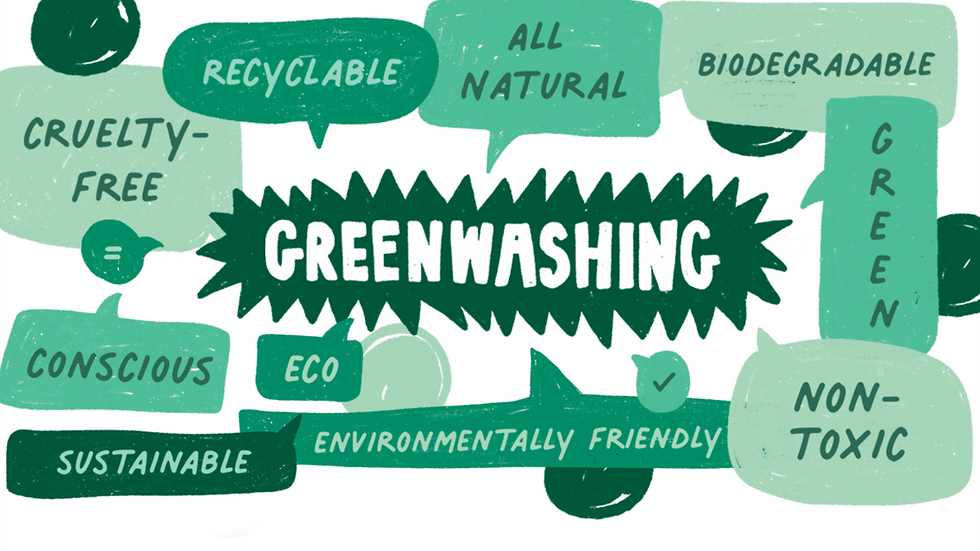
Whether these changes create the real change desired by consumers is another topic entirely. This discrepancy is the basis of “the green concept”, also known as “greenwashing”. The United Nations describes greenwashing as “misleading the public to believe a company (or product) is doing more to protect the environment than it actually is”.
Greenwashing often occurs in two ways: slight manufacturing changes to products (most popularly, plastic packaging and single-use plastic products), and marketing ploys that include unfounded claims. For plastic food packaging specifically, many products marketed as recyclable with the universal three arrows in the shape of a triangle symbol or through marketing phrases such as “natural” and “biodegradable” will never be recycled. These products actually contain Low-Density Polyethylene (LDPE), a lightweight and flexible plastic derivative that the UK does not have the capacity to recycle in large quantities, with around 10,000 tonnes being their annual domestic limit.
Subscribe to our fortnightly newsletter
Get our top stories straight to your inbox every two weeks and stay informed about plastic pollution!
The United Nations released a report titled Integrity Matters to address these misleading attempts at more sustainable business practices and outlined ten recommendations for a net zero future. The report asks businesses to both pledge their commitment to environmentally friendly practices and match it with measurable action. Integrity Matters was followed by a Recognition and Accountability Framework and Draft Implementation Plan to assess expert groups’ ideas and recommendations, and to ultimately crack down on companies practising greenwashing or deceptive and inefficient action.
But the question remains: will the efforts of such organisations, backed by environmentally aware consumers looking to offset their own carbon footprint, create change before it is too late? Or is there more we can do, as consumers and the source of income, to hold these businesses accountable?
Read more about packaging and supermarkets' greenwashing tactics in episode 4 of this series.
+++++++++++++++++
For more information contact: info@scarabtrust.org.uk
Image: spotlight on plastic bottles - Image by Mart Production (ST ref: 1409)


Comments