

How Businesses Lied to us About Sustainability
Updated: Sep 9
Plastic is a non-biodegradable material that has long-lasting negative effects on both the environment and public health. However, it has also become the preferred material of food packaging manufacturers because of its easy storage, cost-effectiveness, and extensive availability.
The vast majority of the packaging industry is not looking to replace plastic, even in light of the current pollution crisis. However, the industry's marketing teams have noticed that younger consumers (aged 20 to 50 are more likely to reject single-use plastic bags or items packaged in single-use plastic and prefer items that align with their vision of a greener, more sustainable future.
Consumer opinions can have a large impact on other consumers’ decisions and product salesTherefore, consumer views play a major role in the packaging industry considering more environmentally friendly and health-conscious changes, such as reducing single-use plastic packaging. However, making sustainable changes in an impactful manner has proven too costly or difficult for most businesses.
Subscribe to our fortnightly newsletter
Get our top stories straight to your inbox every two weeks and stay informed about plastic pollution!
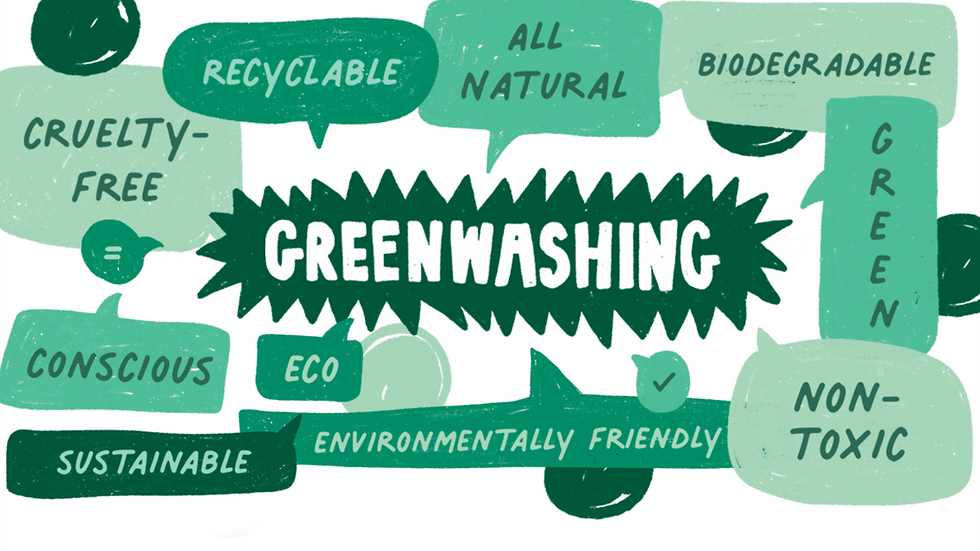
This has led to a phenomenon known as ‘greenwashing’, whereby businesses address consumers’ desires for more sustainable and ecologically friendly products, and enact practices to moderately reduce their usage of plastic packaging. This looks like replacing the bottom of their packaging with cardboard, while keeping a thin plastic film on top, or incorporating some recycled plastic into their packaging. Businesses may then market their products as more environmentally friendly or recyclable, despite the reality that these changes have little to no impact on the recyclability of their packaging or their contribution to the plastic pollution crisis.
Customers then overestimate the positive environmental impact of their choices in packaging,food, or household items, and incorrectly assume that their waste is being recycled or biologically degraded. Due to the misleading effect of the Greenwashing Wave, consumers who actively avoid non-recyclable plastic packaging may find that their plastic waste still ends up in a landfill or in nature. The lack of truly environmentally friendly choices leaves us asking how we can positively impact the plastic pollution crisis.
If consumers understand greenwashing and businesses do not provide affordable and verifiably sustainable options, how do we decide which items to consume?
Read more about packaging and supermarkets' greenwashing tactics in episode 3 of this series.
+++++++++++++++++
For more information contact: info@scarabtrust.org.uk
Image: Greenwashing synonyms - Image from spunout.ie (ST ref: 1297)


Comments