

Danone in court, continuing to mislead.
Updated: Jun 12

Danone is a French food and drink giant and a major plastic polluter. In September 2022, a coalition of anti-plastic NGOs, including ClientEarth, Surfrider Foundation Europe, and Zero Waste France, issued a legal warning to Danone, in an effort to get the mega corporation to publish statistics about its global plastic pollution. However, this warning was ignored. In January of 2023, the coalition filed a lawsuit against Danone over its failure to comply with French due diligence laws regarding plastic use.
In France, companies that employ 5,000 or more workers are required to publish the environmental and social impacts of their manufacturing processes. This ‘duty of vigilance law’ requires that eligible corporations publish an annual vigilance report showing their effects on the environment, health, and human rights. As a company with over five thousand employees, Danone is legally obligated to comply with this law. However, in its 2021 annual vigilance report, Danone omitted plastic consumption.
In September of 2022, the coalition requested that Danone amend its annual vigilance report to include the life cycle of its plastic packaging, from creation to end-of-life, and a statement showing its commitment to reducing plastic production. Danone was asked to map the impacts its use of plastics has on the environment, climate, health and human rights from production to end-of-life and provide a complete assessment of its plastic footprint.
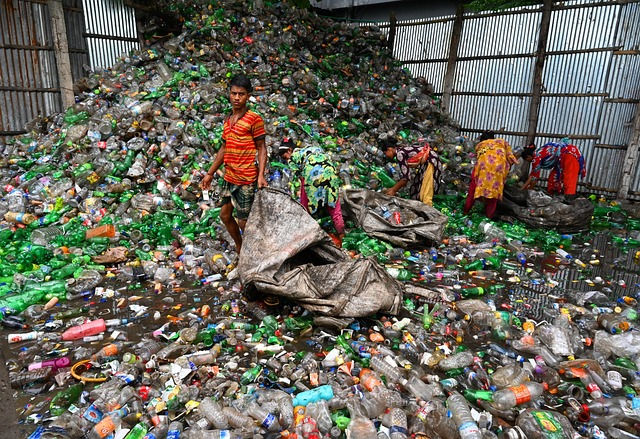
ClientEarth explained that they pursued this case because of the detrimental impact of single-use plastic on the environment and human health. Because they are made from fossil fuels, plastics are highly carbon-intensive – meaning that they generate a large amount of carbon emissions. Plastics are also the biggest killer of marine life. Additionally, the production and destruction of plastic often violate human rights in the Global South.
Upon this request being ignored, the coalition filed a case against Danone. This case lasted until March 2025, when the two parties reached an agreement, and the case was dropped. The agreement rested upon four commitments:
Danone must publish an updated vigilance report that acknowledges the harmful impacts of its plastic production and commits to monitoring scientific developments that relate to these impacts.
Danone must strengthen its mitigation and prevention policy. This means implementing better reuse solutions and publishing the details of these solutions to ensure safety regulations are being followed, protect the environment, and protect local communities.
Danone must publish its complete plastic footprint (from production to distribution).
An annual meeting must be held between Danone and the coalition from 2025 to 2027 to discuss Danone’s environmental strategy.
After this agreement was made, Danone released a statement claiming that it was “delighted to have taken part in an open and transparent discussion”, that “the dialogue has been beneficial”, and that “Danone will continue to act with determination to encourage collective mobilization”. Following this agreement, Danone further recognised that its use of plastic creates a risk to water, air, soil, the climate, human rights, and people’s health.
The coalition continues its dialogue with the company in order to verify whether progress toward reducing plastic use is real or merely declarative, while emphasising the need for deplastification and the necessity of scaling up reuse systems.
Meanwhile, the European consumer organisation BEUC's claims against Danone about misleading recycling information are still under review.
+++++++++++++++++
For more information contact: info@scarabtrust.org.uk
Image: plastic bottle Malaysian beach - Image by Catherine Sheila on Pexels (ST ref: 1379)
Edited by Sophia Stilwell
Additional edit 12 June 26


Comments