

Calling the fossil fuel industry to account
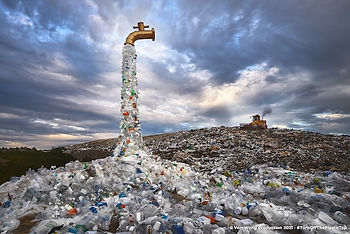
Plastic pollution fuels the climate crisis and social injustices, while also threatening human health and biodiversity.
Tiny plastic particles, from micro to nanoscale, are found everywhere from oceans to human organs.
Meanwhile, the production and disposal of larger plastics generate massive greenhouse gas emissions. Scientists warn that plastic production could triple by 2050, worsening waste, environmental toxicity, and climate impacts.
Governments and communities all around the world are pushing for stronger regulations and policies. Many countries call for clearer production thresholds and more inclusion of scientific, Indigenous, and affected communities in the decision-making process. These efforts aim to reduce plastic waste in oceans and landfills, while protecting human health and wildlife. International initiatives, like the Global Plastics Treaty negotiations, seek a coordinated global approach to tackle plastic issues at their source.
However, despite reaching its final round in Geneva in August 2025, the Treaty failed to produce a legally binding agreement, leaving the world without a clear global plan. In this context, fossil fuel and petrochemical companies are expanding plastic production at unprecedented rates. Since the first treaty talks in 2022, just seven companies (including Dow, ExxonMobil, Shell, SABIC and INEOS) have produced enough plastic to fill more than six million bin lorries, while expanding their production capacity by 1.4 million tonnes. Because plastics are made almost entirely from fossil fuels, this growth locks in decades of additional greenhouse gas emissions, waste, and associated harm to human health and the environment.

This rapid growth is not accidental, but strategic. As the world shifts towards renewable energies and electric vehicles, oil and gas companies see plastics as a reliable way to maintain profits. Industry leaders openly call petrochemicals a “window of opportunity” to keep drilling by turning crude oil into plastic. Production creates more demand: companies flood markets with single-use products while promoting false solutions like chemical recycling, even though true recycling rates remain extremely low.
At the same time, these companies exert extraordinary political power. At COP30, for example, over 1,600 fossil fuel lobbyists attended the conference, outnumbering almost every national delegation. They use their influence to weaken regulations, shape treaties in their favour, and present themselves as partners rather than polluters.
This fundamental conflict of interest threatens the integrity of the global response to end plastic pollution. Advocates are now calling for fossil fuel lobbying to be banned from global negotiations, enforcing strict conflict-of-interest rules, and prioritising the voices of frontline communities.
+++++++++++++++++
For more information contact: info@scarabtrust.org.uk
Images"
TurnOffThePlasticTap - Image by Von Wong (ST ref: 1310)


Comments